


 Electric aviation is moving rapidly from vision to reality. Cargo multicopters, air taxis and other advanced air mobility (AAM) platforms promise cleaner and more flexible transportation – but they also introduce new aerodynamic and structural challenges.
Within the framework of Germany’s national aviation research program (LuFo), the NERO project set out to tackle one of the most critical issues in electric propulsion: dynamic loads, vibration behavior and noise under highly unsteady operating conditions.
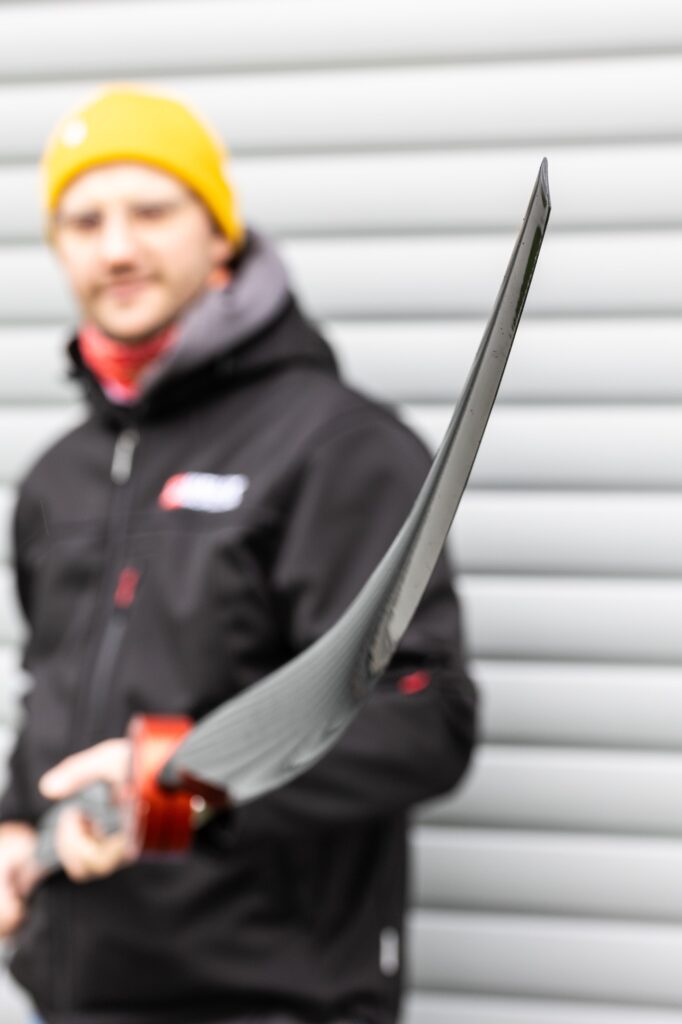
At the heart of the project is the experimental propeller YN2 – a forward-curved ARC propeller developed specifically for electric flight platforms.
Rethinking the Propeller for Electric Platforms
Unlike conventional propellers operating primarily in steady cruise flight, eVTOL systems must perform in constantly changing aerodynamic environments. During vertical takeoff, hover, transition to forward flight and cruise, propellers are exposed to asymmetric and oblique inflow conditions that generate complex dynamic loads.
These loads directly affect electric motor bearings, structural components and passenger comfort. In distributed electric propulsion systems – where multiple propellers operate simultaneously – vibration control becomes a decisive factor for durability, efficiency and certification.
The NERO consortium – led by Wölfel Engineering in collaboration with FH Aachen University of Applied Sciences and Helix-Carbon GmbH – approached this challenge from two directions: active vibration reduction and advanced blade design.
The ARC Concept: Forward-Curved Blade Geometry
The YN2 propeller is based on Helix’s ARC concept – ARC standing for “Advanced Radial Curve.” Unlike traditional straight or conventionally swept blades, ARC propellers feature a distinctive forward curvature.
This forward-curved geometry was invented and developed by Helix and has already demonstrated advantages in vibration behavior and acoustic performance. In the NERO project, the ARC concept was further refined and adapted specifically for electric vertical lift applications.
The forward curvature influences load distribution along the blade and alters aeroelastic behavior under operational conditions. Early evaluations from the project indicate that adapting blade geometry in this way significantly reduces vibration excitation at the operating point – even without additional mechanical damping systems.
For multicopter systems, cargo drones and piloted air taxis, this represents considerable potential. Larger diameters, higher aspect ratios and more aerodynamically efficient blades become feasible when dynamic loads can be better managed.
Coupled Simulation and Experimental Validation
A central milestone of the project was the development and validation of a coupled experimental–numerical methodology to predict aeroelastic propeller behavior under oblique inflow.
High-fidelity URANS simulations were combined with the aeroelastic design environment PropCODE (Propeller Comprehensive Optimization and Design Environment). This two-way coupling allowed aerodynamic loads and structural deformation to be analyzed simultaneously – a critical requirement for slender, forward-curved blades.
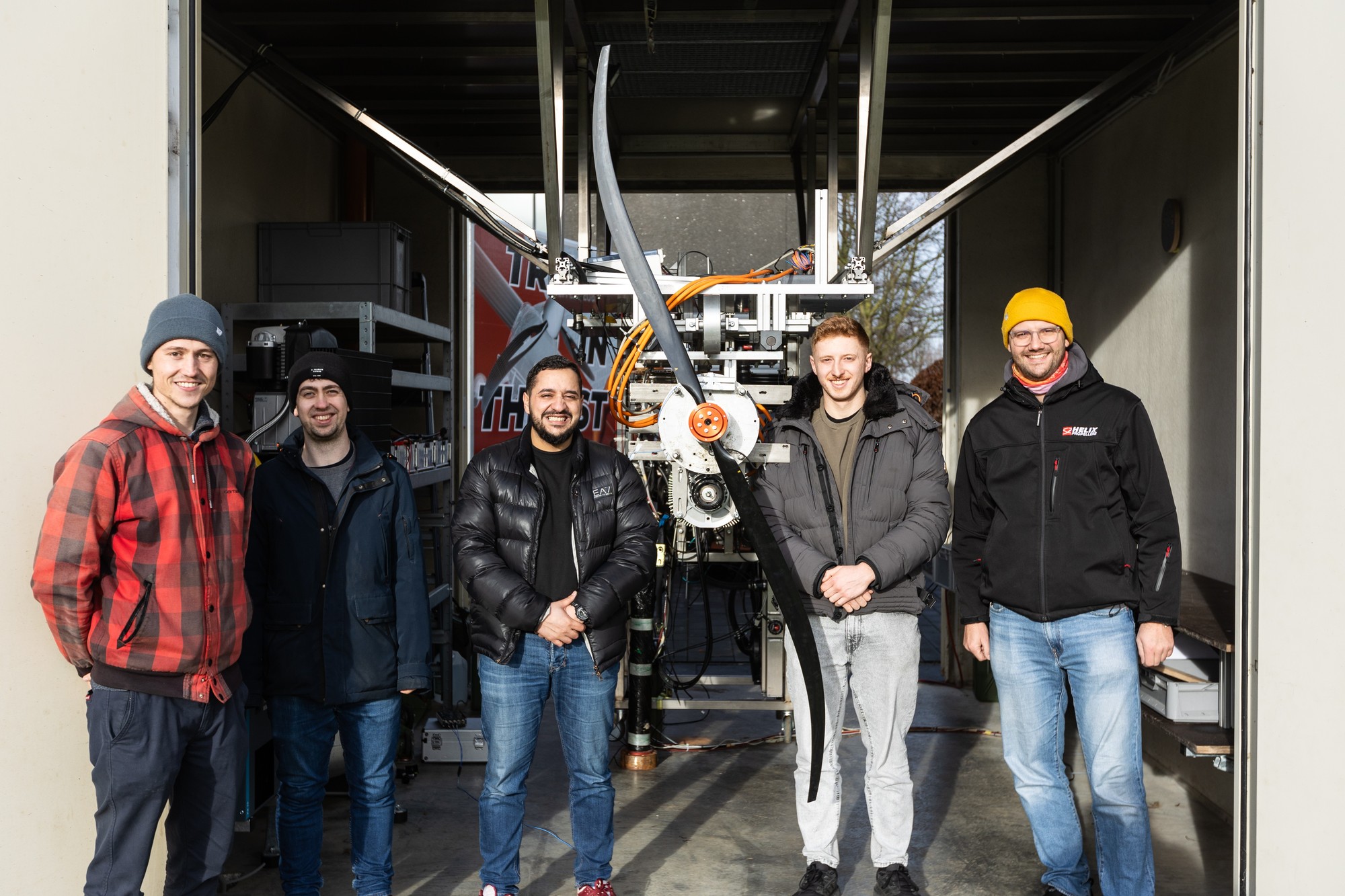
To validate the numerical models, extensive testing was carried out in December at the wind tunnel of FH Aachen and on the Helix propeller test bench. A specially configured test setup introduced periodic excitation to simulate asymmetric inflow conditions typical of transition flight.
The comparison between simulation and measurement showed very strong agreement in both mean loads and dynamic response. Identical flapwise vibration modes were captured at blade passing frequency, demonstrating the robustness of the methodology.
These results mark an important step toward reliable prediction of dynamic loads for future electric aircraft designs.
Active Vibration Reduction: Protecting the Drivetrain
In parallel to blade optimization, the project team developed an active vibration reduction system designed to reduce motor bearing loads during critical flight phases.
While the ARC blade geometry already contributes to smoother operation, the active system further mitigates dynamic excitation transmitted into the drivetrain and airframe. The combined approach – optimized blade geometry plus active vibration control – opens the door to higher efficiency, lower structural stress and improved acoustic performance.
For electric propulsion systems, where long-term bearing reliability is crucial, this development represents a key technological advancement.
International Recognition
Parts of the project results are currently being presented at the American Institute of Aeronautics and Astronautics SciTech Forum in Orlando, Florida. Sharing the findings with the international aerospace community underscores the global relevance of vibration-optimized propeller systems for advanced air mobility.
A Foundation for the Next Era of Electric Propellers
With the NERO project approaching completion, the YN2 ARC propeller stands as more than a research demonstrator. It represents a validated concept for quieter, more efficient and structurally optimized propellers tailored to electric vertical lift platforms.
By combining forward-curved blade geometry, advanced aeroelastic simulation and experimental verification, the project demonstrates that propeller technology can evolve alongside the demands of next-generation aircraft.
As urban and regional electric aviation moves closer to certification and commercialization, innovations like the ARC-based YN2 propeller will play a central role in enabling reliable, efficient and publicly accepted electric flight.